
Is Paragliding Safe?
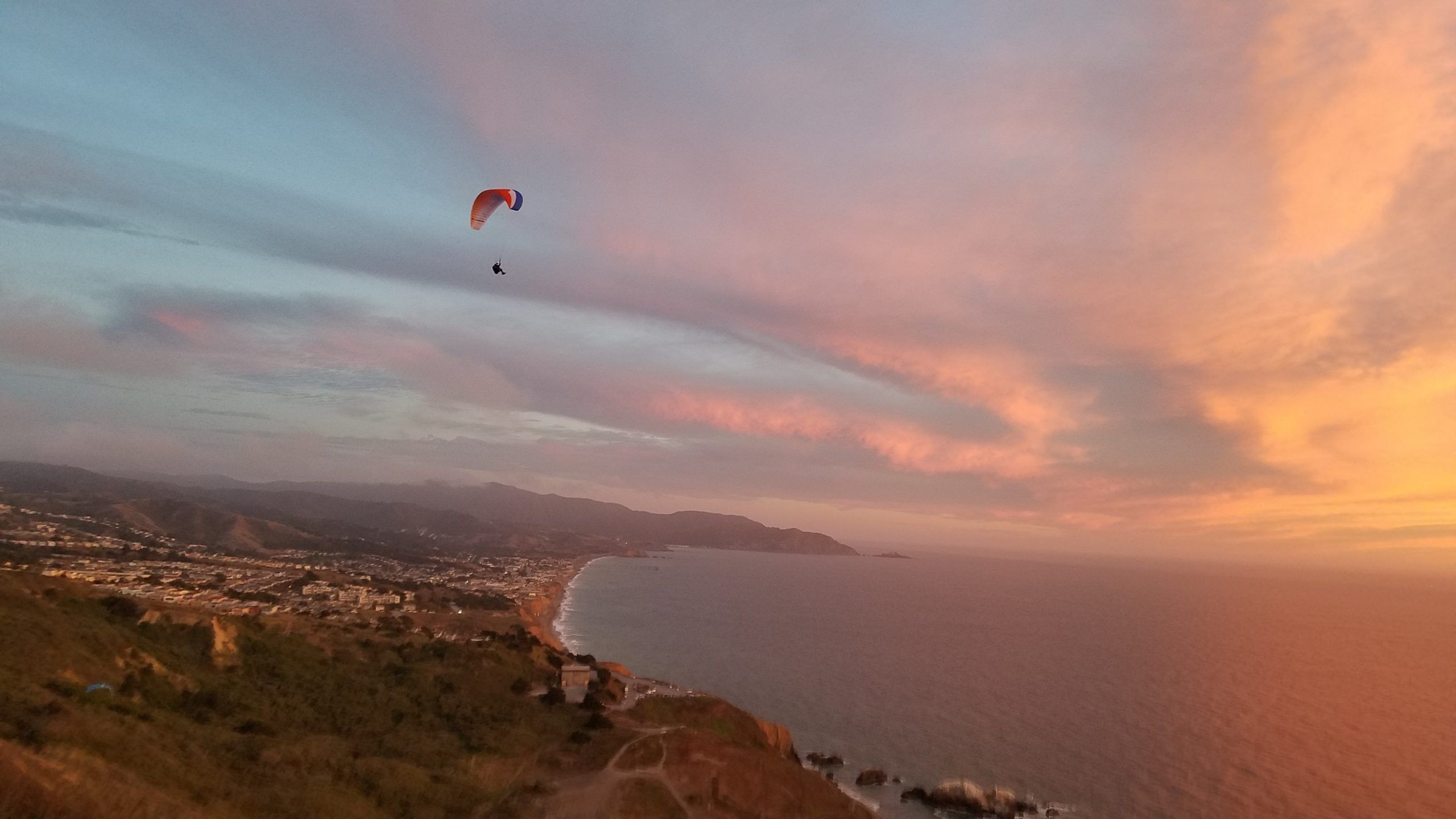
Standing at a paragliding launch for the first time can feel intimidating. That is completely normal. You are looking out over an open landscape while preparing to fly beneath a fabric wing, so having questions about safety is understandable.
The short answer is that tandem paragliding with a qualified professional is one of the safest ways to experience the joy of free flight.
You do not need to know how to fly. Your pilot controls the wing, evaluates the weather, chooses the flight path, and manages the takeoff and landing. Your main responsibilities are to listen during the briefing, follow a few simple instructions, and enjoy the view.
Paragliding is still an adventure sport, however, and no form of flying is completely free of risk. Safety depends heavily on the pilot, equipment, flying site, and—perhaps most importantly—the decision to fly only when conditions are appropriate.
Why tandem paragliding is different from flying solo
A solo pilot must make every decision independently. They must understand the weather, prepare the equipment, control the wing during launch, navigate the flight, respond to changing conditions, and land safely.
During a tandem flight, those responsibilities belong to an experienced pilot.
You and the pilot fly beneath a paraglider specifically designed to carry two people. You each wear a harness, and the pilot sits behind you with access to the controls. Before launching, your pilot checks the equipment, explains what will happen, and gives you clear instructions for takeoff and landing.
For someone with no previous paragliding experience, this removes much of the uncertainty associated with learning to fly. Instead of trying to make unfamiliar decisions in the air, you are flying with someone who has already completed extensive training and accumulated substantial experience.
How qualified are professional tandem pilots?
In the United States, a USHPA-certified tandem instructor must hold an advanced paragliding rating and a turbulence special skill. Candidates must also document substantial flight experience, pass a written test, and complete tandem instructor training.
USHPA states that tandem instructor candidates must have at least 200 hours of airtime or meet an alternative requirement involving 500 qualifying flights. They must then complete additional supervised tandem flights and instructor training. You can read the current requirements in the USHPA instructor certification information.
These qualifications matter because paragliding safety involves much more than steering a wing. Experienced tandem pilots learn to:
- Evaluate wind, clouds, thermal activity, and changing weather
- Recognize when conditions are unsuitable
- Inspect and prepare the equipment
- Manage different passenger weights and physical abilities
- Choose appropriate launch and landing approaches
- Respond calmly when conditions change
- Brief passengers clearly before the flight
When choosing an operator, ask whether its pilots hold current tandem certifications and how frequently they fly the site.
The most important safety decision happens before takeoff
Good tandem pilots do not simply ask, “Can we launch?” They ask whether conditions offer an appropriate margin for a comfortable tandem flight.
Wind direction, wind speed, thermal activity, visibility, approaching weather, and conditions at the landing area can all affect that decision. Conditions may look pleasant from the ground while still being unsuitable for paragliding.
This is why flights are sometimes delayed, rescheduled, or canceled.
A weather cancellation can be disappointing, especially when you have been looking forward to flying. It is also one of the clearest signs that an operator takes safety seriously. A professional pilot should never feel pressured to launch simply because a reservation has been made.
At [Company Name], we would rather reschedule your flight than fly in conditions that do not meet our standards.
What safety equipment is used?
Professional tandem operations use equipment made specifically for two-person flying. A typical setup includes:
- A certified tandem paraglider designed for the combined weight of the pilot and passenger
- Separate, properly fitted harnesses
- Helmets for the pilot and passenger
- Tandem spreaders and rated connection hardware
- A reserve parachute sized for a tandem load
- Appropriate footwear and clothing for the conditions
Equipment must be used within its approved weight range and inspected regularly. Connection points, lines, harnesses, reserve systems, and the wing itself should all be included in the operator’s inspection and maintenance process.
Equipment is only one part of the safety system. Training, sound judgment, appropriate conditions, and a well-managed launch are just as important.
Is takeoff scary?
Tandem paragliders do not normally jump from a cliff. A typical foot launch begins on a suitable slope.
Your pilot prepares the wing behind you and explains exactly what to do. When instructed, you begin moving forward together. As the wing rises and starts supporting your weight, your steps become lighter until you are airborne.
The most important thing is to continue moving and follow your pilot’s instructions. Do not sit down early or stop unexpectedly during the launch run.
Many passengers say the transition into the air feels gentler than they expected. There is usually no sudden drop. Instead, the wing progressively lifts you away from the slope.
Because launch procedures vary with the site and conditions, always follow the briefing given by your pilot on the day of your flight.
What does paragliding feel like?
A normal scenic tandem flight is generally smooth and peaceful. Once seated comfortably in the harness, you can look around, talk with your pilot, and take in the landscape.
Paragliding does not need to involve sharp turns or aerobatic maneuvers. If you prefer a calm flight, tell your pilot. A professional should tailor the experience to your comfort level and avoid optional maneuvers unless you want them and conditions permit.
Some passengers experience motion sickness, particularly during longer flights or repeated turns. If you are prone to motion sickness, mention it before takeoff. Your pilot may be able to adjust the flight accordingly.
What can passengers do to make the flight safer?
You do not need special skills, but you should arrive ready to participate in the launch and landing.
Before your flight:
- Tell the operator about injuries, mobility limitations, medical conditions, or concerns that could affect your participation.
- Wear secure footwear suitable for moving across uneven ground.
- Follow the operator’s recommendations about clothing.
- Listen carefully to the preflight briefing.
- Ask questions if any instruction is unclear.
- Do not fly while impaired by alcohol or drugs.
- Follow your pilot’s commands promptly during takeoff and landing.
You should also read the operator’s waiver and insurance information carefully. USHPA advises tandem students to understand the risks and ensure that their health coverage does not exclude the activity. Its tandem student informationexplains these considerations in more detail.
How do I choose a safe tandem paragliding company?
Before booking, look for an operator that is transparent about its pilots, qualifications, equipment, and weather policies.
Consider asking:
- Are your pilots currently certified for tandem paragliding?
- How much experience do they have at this particular flying site?
- Do you use equipment designed and maintained for tandem flight?
- Do you carry a tandem reserve parachute?
- What conditions would cause you to delay or cancel a flight?
- What should I wear and bring?
- Are there age, weight, health, or mobility requirements?
- What happens if the weather changes before launch?
Be cautious if an operator dismisses every safety concern, promises that flying is completely safe, or seems willing to launch in any conditions. Honest operators acknowledge the risks and explain how they manage them.
So, is tandem paragliding safe?
Tandem paragliding is an adventure activity, so it cannot be described as risk-free. But flying with a qualified professional provides a significant advantage over trying to learn or fly independently.
Your pilot brings the training, experience, local knowledge, and judgment needed to manage the flight. The equipment is designed for two people, the conditions are assessed before takeoff, and the experience can be adapted to your comfort level.
For most first-time passengers, the anticipation is more intimidating than the flight itself. Once the wing lifts them smoothly from the hillside, nervousness often gives way to a feeling of calm—and an unforgettable view.
If you have questions about the flight, equipment, weather, or what to expect, contact [Company Name]. We will be happy to talk through the experience before you decide whether tandem paragliding is right for you.