
Kiting a Paraglider
Kiting is the skill of keeping the paraglider overhead while standing on the ground.
It is one of the most important skills in paragliding because good kiting makes launches safer, cleaner, and more controlled.
Preset hands can feel confusing at first, but they make reverse launches much safer once you get used to them.
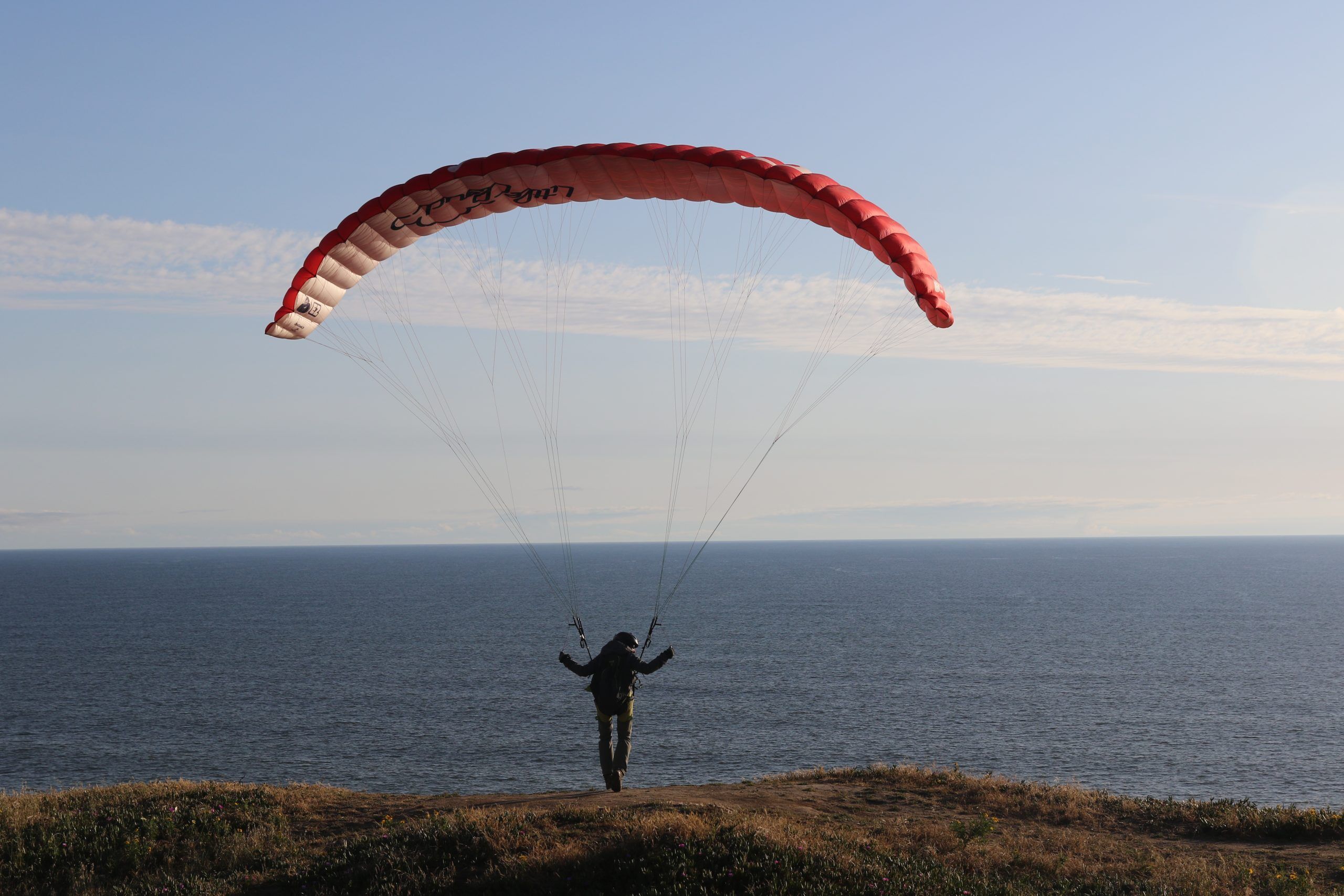
What “Preset Hands” Means
When you are facing the wing during a reverse launch, the risers are crossed.
With preset hands:
- Each brake is already in the correct hand for flying forward
- You do not need to switch brake handles after turning around
- If you get lifted before you finish the turn, you can simply turn forward and fly
This is the main reason preset hands are taught.
Why Preset Hands Are Safer
With old-school straight-handed kiting, the brakes feel more natural while facing the wing.
But there is one big problem:
- You bring the wing up
- You turn around
- You have to switch the brakes
- During that switch, you have less control
That brake switch can happen at the worst possible moment, right when the wing is loaded or when a gust comes through.
With preset hands, there is no brake switch.
You are already set up to fly.
Before You Practice Kiting
Do not start kiting until you can consistently bring the wing up and stop it in a stable overhead position.
A good starting point is:
- Wing comes up mostly centered
- You can stop it from overshooting
- You can keep it overhead for a moment
- You can safely abort when needed
Good wind for learning is usually steady and moderate. Around 7–12 mph is a good range for many wings.
In lighter wind, you can still practice by walking backward into the wind.
The Main Rule
Move under the wing.
This is the most important idea.
Do not stand still and fight the glider.
If the wing moves right, move right.
If the wing moves left, move left.
Your job is to keep your body under the center of the wing.
Start With Body Movement First
Before using the brakes too much, learn what your body does to the wing.
Practice this:
- Bring the wing up
- Keep your arms relaxed
- Watch where the wing goes
- Move your body under the wing
- Keep steady pressure in the harness
If the wing moves to your right:
- Turn your feet and hips to the right
- Move under the right side of the wing
- Keep moving into the wind
If the wing moves to your left:
- Turn your feet and hips to the left
- Move under the left side of the wing
- Keep moving into the wind
In lighter wind, you usually need to move backward and slightly toward the low side.
In stronger wind, you may move more sideways or slightly back.
Do Not Pull Against the Wing
A common beginner mistake is trying to face the wing and pull against it.
That usually makes things worse.
Instead:
- Stay loose
- Move with the wing
- Turn your hips and feet toward the side the wing is moving
- Keep your body under the wing
Think of it more like dancing with the wing than fighting it.
Add the Brakes After You Understand the Body Movement
Once you can keep the wing up with mostly body movement, start adding light brake input.
The simple rule is:
Move toward the wing and pull a little brake on that same side.
Example:
If the wing is drifting to your right:
- Move right
- Turn your hips and feet right
- Pull a little right brake
- Ease off as the wing comes back to center
If the wing is drifting to your left:
- Move left
- Turn your hips and feet left
- Pull a little left brake
- Ease off as the wing comes back to center
Use small inputs.
Do not yank the brake.
Keep the Other Brake Released
Another common mistake is pulling both brakes without realizing it.
This usually happens when the pilot is tense.
If you pull one brake, make sure the other hand is relaxed and fully released.
If the wing is not coming back to center, check this first:
- Am I pulling the opposite brake by accident?
- Are my shoulders tense?
- Are my arms locked?
- Is the non-pulling hand all the way up?
Relaxed arms make everything easier.
Keep the Wing Centered
At first, use your eyes.
Watch the wing.
When it starts to move to one side:
- Move under it
- Add a small brake correction
- Ease off before it passes center
The goal is not to make big corrections.
The goal is to keep the wing close to center with small, smooth corrections.
Later, you will start to feel the wing through the harness before it moves very far.
That is when kiting starts to feel more natural.
Light Wind: Use a Small “Bump”
In light wind, the wing needs extra energy to stay overhead.
If the wing starts drifting to the side, do not just pull more brake.
Too much brake can make the wing fall back.
Instead, use a small bump:
- Move under the low side
- Keep backing into the wind
- Add a little brake
- Give the wing enough energy to come back overhead
The bump is not just a brake pull.
It is body movement plus a small brake correction.
Body Position
In stronger wind:
- Stay lower in the harness
- Keep your weight down
- Be ready for gusts
- Keep your feet solid on the ground
In lighter wind:
- Stay balanced
- Keep your weight on the balls of your feet
- Avoid leaning back onto your heels
If you keep falling backward while backing up, you are probably on your heels too much.
How to Hold the Brakes
When lifting the wing:
- Hold the brake handles low enough that you are not accidentally pulling brake
- Let the wing come up cleanly
- Once the wing is stable, you can move your fingers higher on the brake handle for better feel
Your arms should stay relaxed.
You want to feel the brakes, not fight them.
Different Wings Feel Different
Not all paragliders kite the same.
Some wings want a little brake tension to stop them from overflying.
Other wings fall back more easily and need more movement and power from the pilot.
Spend time with your wing.
Learn how it reacts.
Simple Practice Order
Use this order:
- Learn to bring the wing up cleanly
- Practice keeping it overhead with body movement
- Move under the wing every time it drifts
- Add small brake inputs on the side you are moving toward
- Keep the other brake fully released
- Keep the wing centered with small corrections
- Practice until it feels automatic
The Big Takeaway
Preset hands feel strange at first because the risers are crossed and the brakes do not feel obvious while you are facing the wing.
But the goal is simple:
- Move under the wing
- Stay relaxed
- Use small brake inputs
- Keep the wing centered
- Avoid switching brakes during the turn
The better you get at kiting, the better your launches will be.
Good kiters are usually good launchers.