
Paraglider Flare Timing: A Simple Guide
A good landing is all about converting the wing's remaining energy into lift at the right moment. The flare slows your descent just before touchdown, allowing you to land softly on your feet.
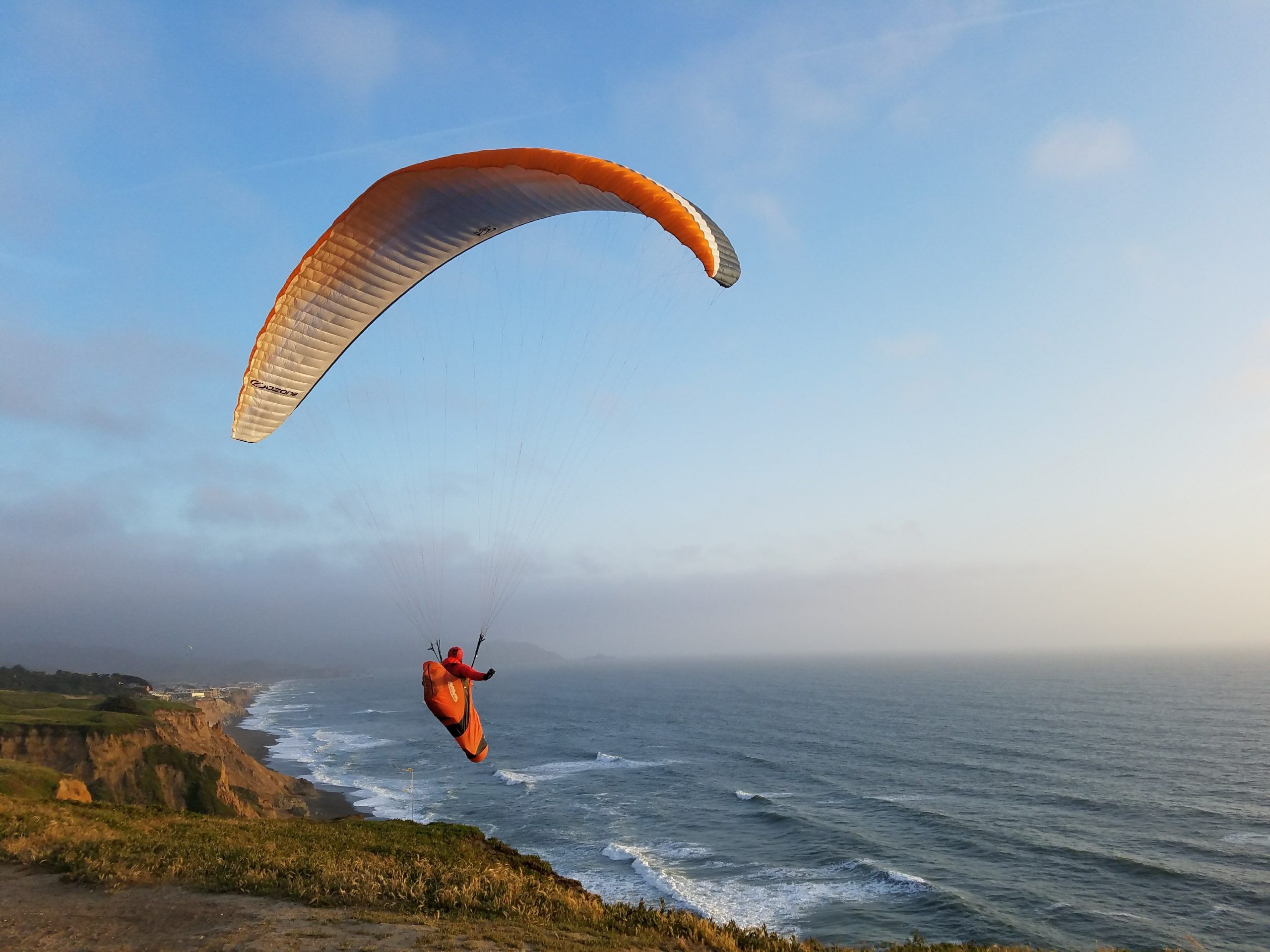
Before the Flare
As you approach the ground:
- Maintain good airspeed on final.
- Avoid sharp turns below about 25 feet.
- Get fully upright with your legs ready to run.
- Look toward the horizon, not straight down.
The most important thing to judge is your height above the ground and your descent rate, not your forward speed.
The 7–5–3 Method
Think of the flare as a smooth, progressive movement rather than one sudden brake pull.
7 Feet: Start the Flare
When your feet are approximately 6–9 feet above the ground, begin a smooth, gradual flare.
Do not pull aggressively. You're simply beginning to convert speed into lift.
5 Feet: Evaluate
At about 5 feet, observe what the wing is doing.
If the wing levels off or briefly climbs:
- Hold the brakes where they are.
- Do not continue pulling.
- Do not raise your hands.
Wait for the glider to begin descending again.
If the wing is still descending steadily:
- Continue the flare smoothly.
- Be prepared to increase brake pressure.
3 Feet: Finish the Flare
When you reach approximately 2–3 feet above the ground:
- Complete the flare.
- Use the remaining energy in the wing to slow your descent as much as possible.
- Be ready to take a few running steps if necessary.
Adjusting for Wind
Light Wind or No Wind
Use a full flare. The wing's energy will help slow both your descent and forward speed.
Strong Wind
A full flare may not always be appropriate. Too much brake can cause the wing to stall overhead or pull you backward.
Use only the amount of brake necessary to achieve a soft touchdown.
Common Mistakes
Flaring Too Late
The most common mistake.
When you wait too long:
- The flare becomes rushed.
- The wing has less time to generate lift.
- Landings become harder.
Flying Too Slowly on Final
A slow wing has less energy available for the flare.
Maintain good airspeed throughout your approach.
Looking Down
Looking straight at the ground creates the illusion that you're moving faster than you are.
Keep your eyes forward toward the horizon.
Releasing the Brakes During the Flare
Once the flare has started, avoid suddenly raising your hands.
This can allow the wing to surge forward and increase the chance of a hard landing.
If You Start Too Early
Below About 10 Feet
If you've already committed to the flare, hold the brakes where they are.
Do not abruptly release them.
Above About 10 Feet
If you clearly started too high:
- Smoothly raise the brakes only partway.
- Allow the wing to regain speed.
- Begin a new flare lower to the ground.
Key Takeaway
The flare is not primarily about stopping forward motion.
Its main purpose is to reduce your vertical descent rate before touchdown.
Remember:
Start around 7 feet.
Evaluate around 5 feet.
Finish around 3 feet.
With practice, these numbers become less important than developing a feel for the wing's energy and timing the flare to match the conditions.