
Paragliding vs. Hang Gliding
Paragliding and hang gliding look almost the same from the beach. Both are foot-launched aircraft with no engine, both ride the same coastal wind, and around San Francisco both fly the bluffs just south of the city. Where they part ways is in how they fly and how easy each one is to try. Here is a plain look at both, a short history of each, a side-by-side comparison, where to fly them near San Francisco, and why paragliding has become the one most newcomers choose.
A short history of hang gliding
Hang gliding is the older of the two. Its modern shape came from the Rogallo wing, a flexible delta wing that Francis and Gertrude Rogallo patented in 1948 and that NASA studied through the 1960s as a way to bring spacecraft home. Backyard builders saw the design, hung themselves beneath it, and started running off hills. By the early 1970s the sport had caught on fast in California, and the coastal bluffs at Fort Funston, right on the edge of San Francisco, became one of the best known flying sites anywhere. A hang glider pilot lies prone under a rigid frame and steers by shifting body weight against a control bar.
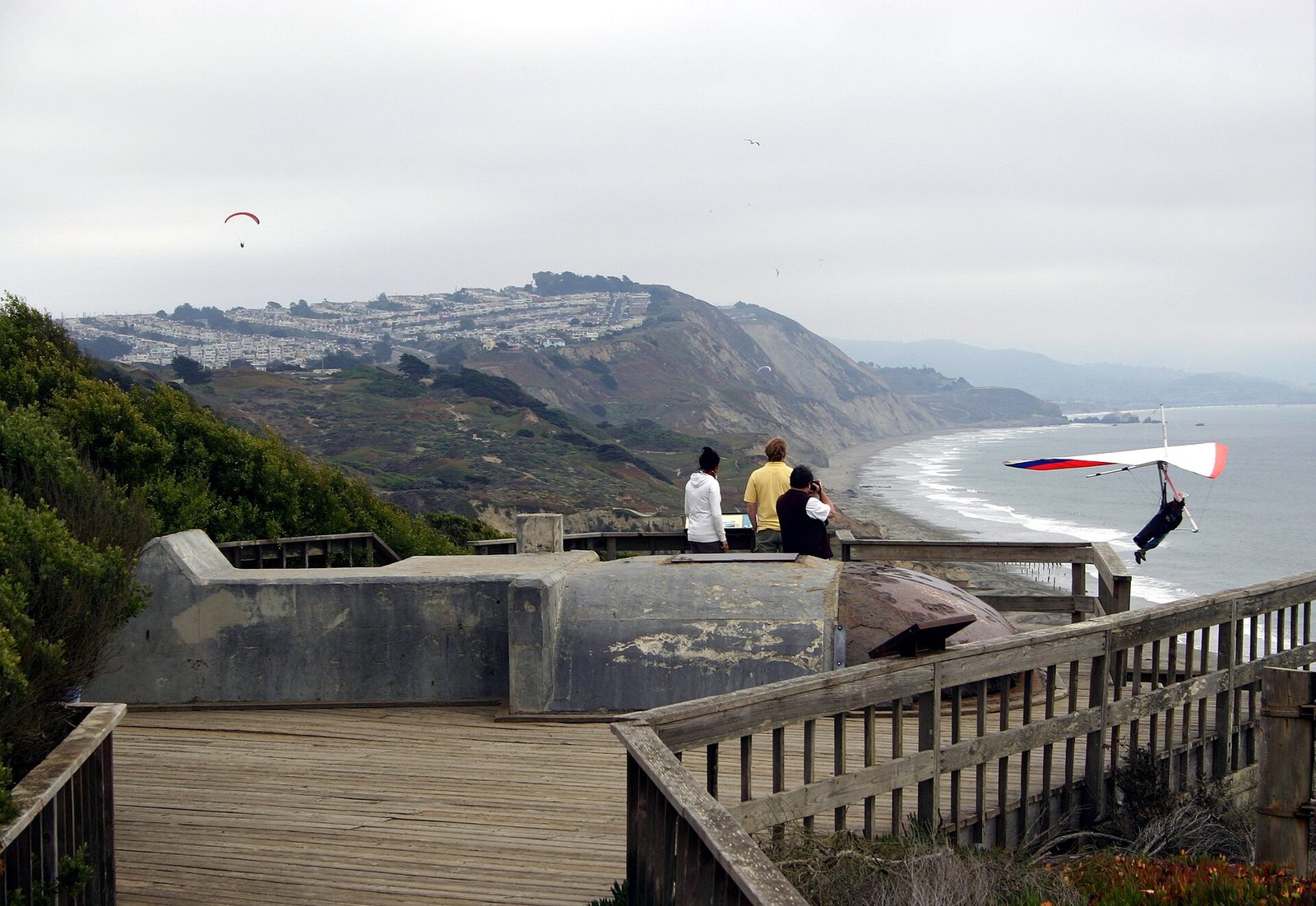
Hang glider at Fort Funston. Photo: Viriditas, CC BY-SA 3.0, via Wikimedia Commons.
A short history of paragliding
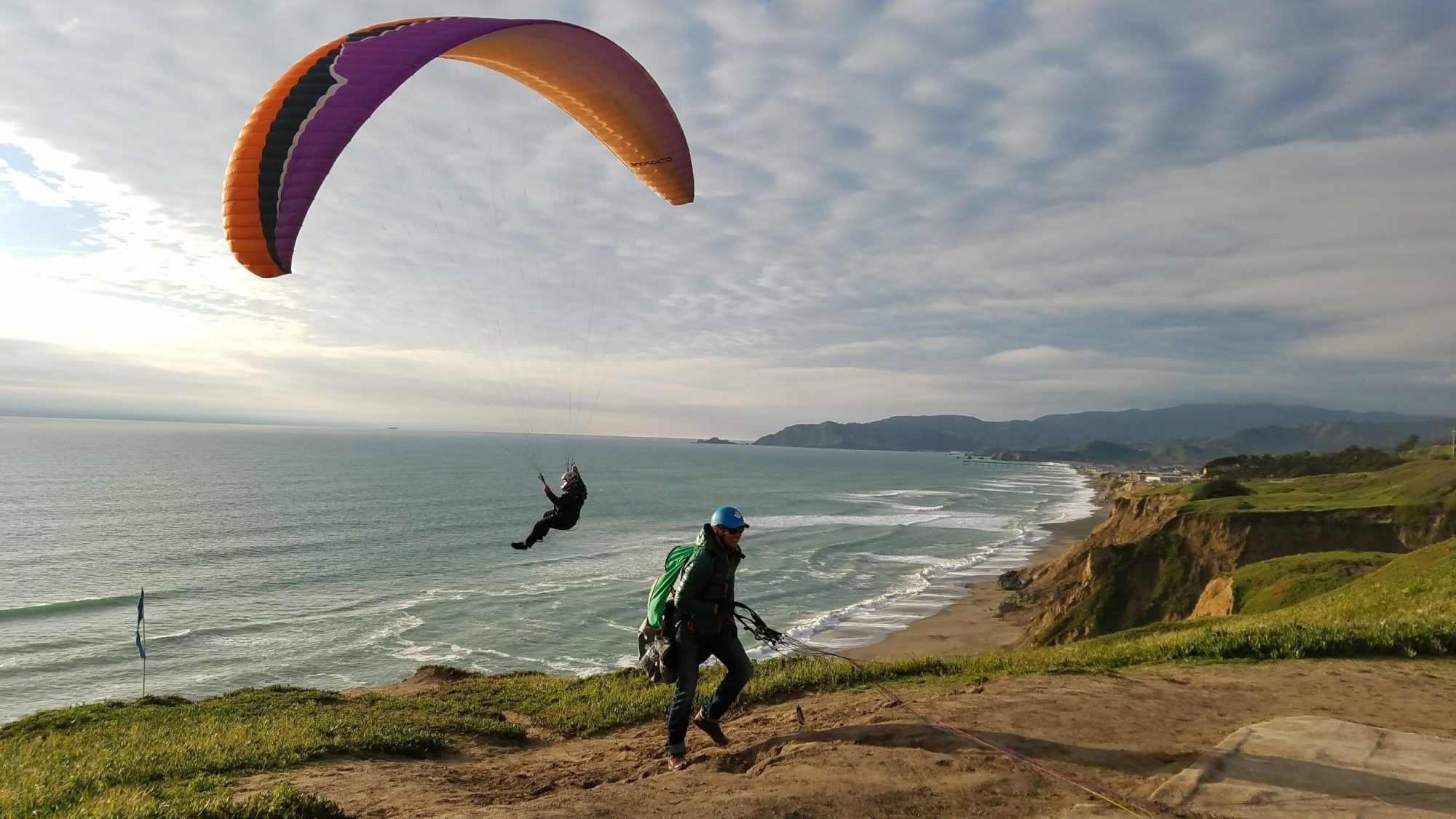
Paragliding grew out of the parachute. Through the 1960s and 1970s a handful of people realized that a steerable, ram-air canopy could be run off a slope and actually flown rather than simply dropped. Mountaineers in the French Alps took to it in the mid-1980s as a fast way down from a summit, and the French name, parapente, stuck. Once manufacturers began building wings made for flying instead of falling, the sport grew quickly through the late 1980s and the 1990s. A paraglider pilot sits upright in a harness under a soft fabric wing, steers with two brake handles, and packs the whole aircraft into a backpack.
Paragliding vs. hang gliding: the main differences
The wing is the heart of it. A hang glider holds its shape with an aluminum and composite frame, so it flies faster and glides flatter, and it travels on a roof rack. A paraglider has no frame at all, so it flies slower and gentler, sets up in a few minutes, and packs into something you carry on your back.
| Paragliding | Hang gliding | |
|---|---|---|
| The wing | Soft fabric wing, no frame | Rigid frame under a sail |
| How you fly | Sitting upright in a harness | Lying prone under the frame |
| Speed | About 20 to 35 mph | Faster, with a flatter glide |
| Packs to | A backpack, around 30 to 40 lb | A 15 foot roof-rack load, around 70 lb |
| Setup time | A few minutes | Longer |
| Learning to solo | Quicker | Takes longer |
| Tandem near SF | Daily at Mussel Rock | Hard to book |
| Cost to try | $189 for a tandem | Not bookable locally right now |
Where to fly each near San Francisco
To learn hang gliding you head south of the city. NorCal Hang Gliding teaches solo lessons at Ed Levin County Park in Milpitas, starting around $250 for a first lesson. Mission Soaring Center, the area's oldest school, trains near Hollister. California Hang Gliding in Pacifica is the one local operator that advertises a tandem flight, though it books by inquiry only and caps passengers at 180 pounds. Fort Funston itself is for rated pilots, so the easiest way to enjoy it as a visitor is to watch from the deck.
Paragliding is the one you can book today. We fly tandem paragliding at Mussel Rock in Daly City, the same coastal bluffs about four miles south of Fort Funston, seven days a week whenever the wind cooperates. A certified pilot does the flying while you take in the coast, and first-timers from age 14 to 97 can come along. Our tandem flight is $189, and our Hang Gliding San Francisco guide has more on watching the gliders at Fort Funston.
Why most people choose paragliding now
Hang gliding built the sport and still has a devoted following, but paragliding has quietly become the way most newcomers get into the air. Convenience is the biggest reason. A paraglider fits in a backpack, so there is no roof rack and no fifteen-foot frame to store or set up before every flight. The learning curve is gentler too, because launches and landings happen at a walking pace and the wing is simple to handle, so most pilots reach their first solo flights sooner than they would on a hang glider.
Then there is the plain fact that you can try it. Tandem paragliding runs near San Francisco on every flyable day, with a certified pilot in command and nothing to learn beforehand. Bookable tandem hang gliding near the city has all but vanished. For anyone who wants to feel what free flight is like without committing to a season of lessons, that tends to settle the question. The slower speeds and the soft, forgiving wing are part of the appeal as well, which is why a tandem paraglide is something you can bring a child or a grandparent along for.
Frequently asked questions
Is paragliding or hang gliding safer?
Can I try hang gliding near San Francisco?
What is the difference between a paraglider and a hang glider?
Which one is easier to learn?
How much does it cost to try paragliding near San Francisco?
Do you need experience to go paragliding?
Keep exploring
- Book a tandem paragliding flight
- Hang Gliding San Francisco guide
- Is Paragliding Safe?
- Bay Area Adventure Guide
- Glider Rides San Francisco
Ready to feel it for yourself? Book a tandem paragliding flight and fly the same coast the hang gliders made famous, 15 minutes from San Francisco.